The Standard Borrowing Protocol Partners with LI.FI to Facilitate Smooth Cross-Chain Transactions
TL;DR – The fast-growing borrowing protocol called The Standard Protocol on Arbitrum is now integrated with LI.FI, empowering users to effortlessly swap tokens across chains.
TheStandard.io, a pioneering decentralized borrowing protocol, has unveiled its recent integration with LI.FI. This collaboration addresses a vital challenge: assisting users with diverse crypto assets scattered across various chains to easily convert and send them to Arbitrum to begin borrowing without interest. By embedding LI.FI’s widget within its dApp, The Standard, makes it simple to bridge any asset to Arbitrum and convert it to accepted collateral like ETH, ARB, PAXG, LINK, or WBTC in just one step.
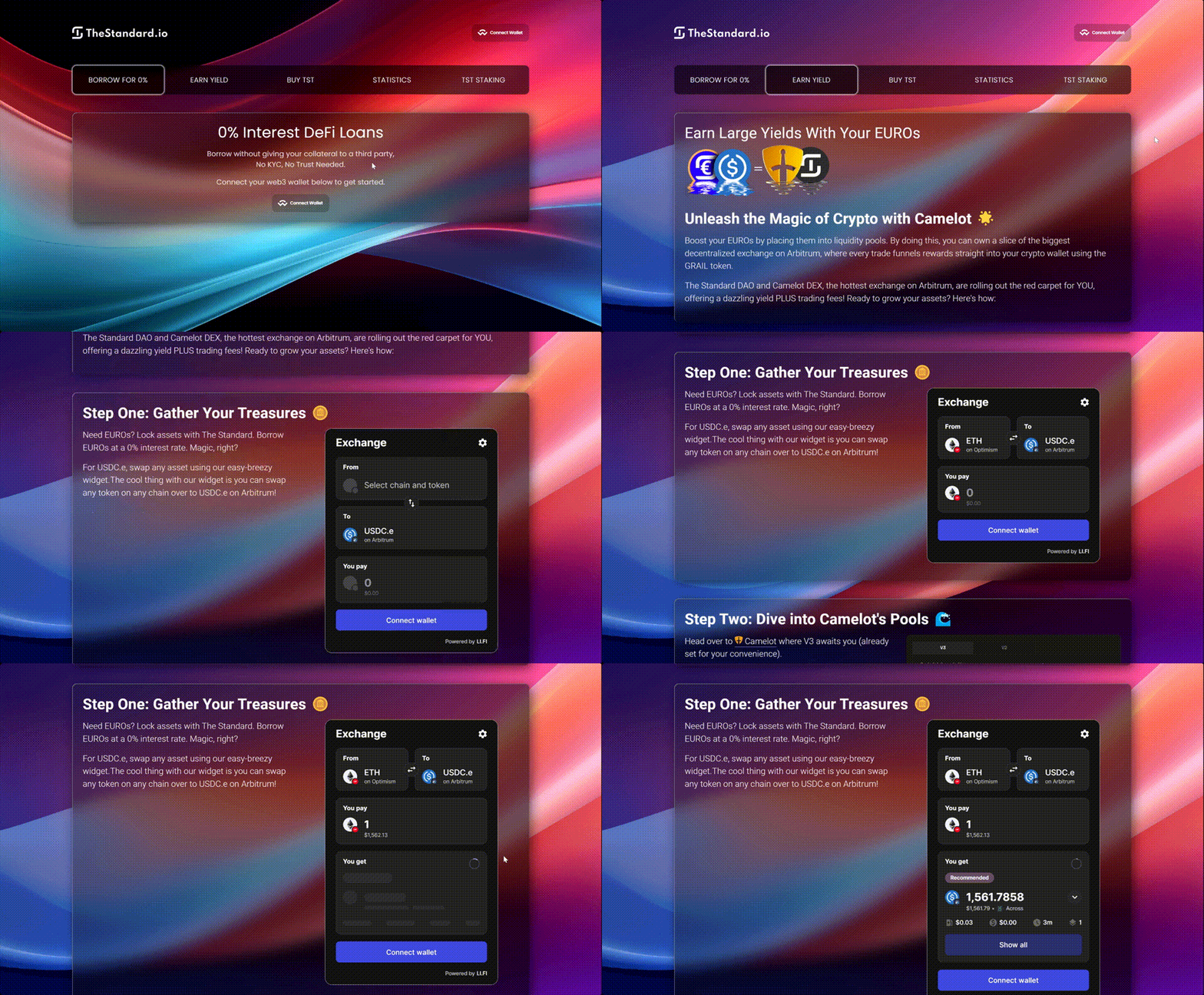
Utilizing LI.FI’s impressive aggregation of 34 DEXs, 20 chains, and 14 bridges, The Standard ensures optimal and simplified cross-chain & same-chain swaps. This partnership also facilitates easy conversion to USDC.e, enabling users to invest the borrowed stablecoins from TheStandard.io into liquidity pools.
We're thrilled to have The Standard join the expanding LI.FI family.
Discovering The Standard Protocol:
The Standard Protocol is a transformative DeFi borrowing platform where users can access crypto loans at 0% interest with just 110% collateral. It offers unique features, like allowing users to swap locked collateral to avoid liquidations or adapt to market shifts. All collateral is securely stashed in decentralized "Smart Vaults" under the user's complete control. This groundbreaking method empowers users to harness their assets' worth, ensuring zero-interest borrowing without intermediary trust.
Currently, users can borrow the "Standard Euro (EUROs)", a fiat Euro-pegged stablecoin, with other currency pegs slated for future rollout. The protocol’s flexibility is evident as it endorses multiple collateral types in one vault and supports trading within the vault while preserving the collateral’s locked status. Moreover, this debt can be traded as dynamic NFTs, introducing new layers of debt management utility. The protocol's governance is vested in the Standard Token ("TST") holder community, forming the heart of the Standard DAO.
To learn more about The Standard check out their,

What is LI.FI?
LI.FI is the most advanced bridge and DEX aggregator with smart routing capabilities to find the best route to move any asset on any chain, to another asset on another chain. We have added support for 13 bridges across 15+ EVM-compatible chains, along with all DEX aggregators & DEXs on those chains, into a single solution that is available as an SDK, Widget, or API.
We believe Web3 needs to be made available for not only the next million users, but for the next million developers to build on it as well.
Our SDK is the ultimate cross-chain money lego for dApps to build on top of or plug into themselves.
We've integrated multiple fallback bridges + DEXs so that you don't have to
We maintain bridges + DEXs so that you don't have to
We choose the best bridges based on our research so that you don't have to (positioning ourselves neutral)
For some examples of how LI.FI works, check out:
MetaMask Bridges - API Integration
Superfluid - Widget Integration
Alchemix - SDK Integration
FAQ: The Standard Borrowing Protocol Partners with LI.FI to Facilitate Smooth Cross-Chain Transactions
Which Chains are supported?
Supported networks for this partnership include Ethereum, BSC, Arbitrum, Polygon, Optimism, Avalanche, Base, zkSYNC, Linea, Polygon zkEVM, Gnosis, Aurora, Fantom, OXK, Boba, Moonbeam, Moonriver, Fuse and Velas.
Get Started With LI.FI Today
Enjoyed reading our research? To learn more about us:
- Head to our link portal at link3.to
- Read our SDK ‘quick start’ at docs.li.fi
- Subscribe to our newsletter on Substack
- Follow our Telegram Newsletter
- Follow us on X & LinkedIn
Disclaimer: This article is only meant for informational purposes. The projects mentioned in the article are our partners, but we encourage you to do your due diligence before using or buying tokens of any protocol mentioned. This is not financial advice.