Markets, Not Chains - Why Crypto Must Evolve

Since inception, LI.FI's core thesis has been about connecting chains. We wanted to build infrastructure that lets value move across the crypto ecosystem without friction.
That description is no longer accurate.
After 75.7 million transactions, across more than 60 blockchains, and over $64bn in lifetime volume, it's become clear we were thinking about the problem the wrong way.
We're not connecting chains. We're making markets accessible.
This is what much of the industry discourse misses. Chains matter a great deal, they're the foundation the entire industry is built on. But they are the backend infrastructure, they don't matter to users.
Users don't wake up wanting to use a chain. Businesses don't care which chain they're on, unless it's their own. What they care about is the market: where liquidity is, where demand exists, where opportunity lives.
This reality requires us to adapt our mental models and evolve as an industry, or risk stagnation.
Crypto's endgame isn't a world of many fragmented chains. If it were, we'd simply be recreating the same fragmentation that chokes legacy finance. The real endgame is creating the universal market for global finance.
In that model, fragmentation is the enemy and markets, not chains, should be our rallying point - because chains are what the system runs on, but markets are what it coordinates around.
The Fragmentation Tax
The age-old mental model in crypto has historically been chain-centric. Apps launch on "their" chain. Liquidity lives in chain-centric silos. Developers optimize within constraints defined by which chain they're building on. This made sense when chains were genuinely isolated and moving between them was impossible or broken.
But that era is over. Today, users can move assets across chains in seconds, for a few basis points. The capital efficiency we now have beats every other set of financial rails. It's cheaper and faster to move money in crypto than in any other financial system in the world.
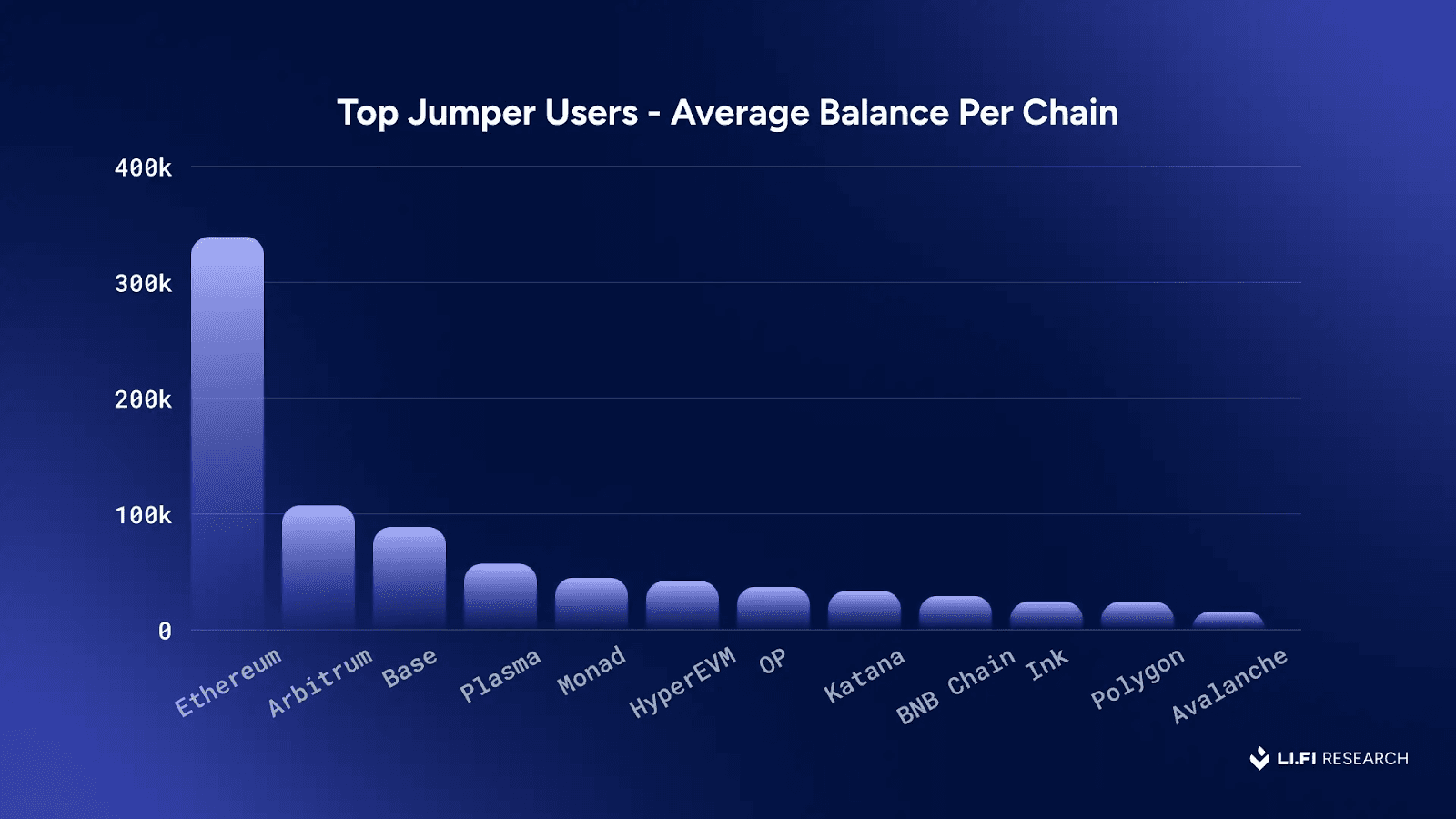
A typical user today has funds across many chains., Source: LI.FI Research
What we have now is an ecosystem where, technically, everything is connected. But in practice, we're still fragmented. We build in chain-centric silos. That approach does grow the pie but more slowly than it should, and at the cost of even more fragmentation.
Chain-centric design fragments liquidity, it fragments talent, and it fragments every resource that matters to make the industry grow.
Crypto promises a better world. Finance that is global, permissionless, and always on. But we can't deliver on that promise while thinking in blockchain boundaries.
Crypto today is like a global financial system with medieval borders. This is the fragmentation tax we're still paying and will keep paying unless we shift our mental model from chains to markets.
That shift realigns incentives across the industry.
Base layer protocols like chains compete on performance. When users can sidestep any chain, competition on performance, cost, and features intensifies, driving the wider industry forward.
Applications that put users first win. Apps can still build deep moats by specializing in particular markets. What stops working is "chain-native" identity as a value proposition on its own. Users don't want the same app cloned across ten chains. They want the best experience in a given market, regardless of which chain makes it possible.
We already have what's needed to make this real. The technology is ready. User behavior is pointing in the same direction. What's left is for the industry to stop treating chains as the end goal and start building for markets.
This is how crypto wins long term. By building for markets, we build infrastructure and applications that users and businesses actually want. That's how the ecosystem grows.
To make this jump from chains to market, we need infrastructure for orchestration. We have the chains. We have the builders. We have the capital. We need the technology that makes accessing the markets simple.
That's what LI.FI is building.
More soon on the products we've been working on over the past two years that will solve the access problem for the industry.
Disclaimer:
This article is only meant for informational purposes. The projects mentioned in the article are our partners, but we encourage you to do your due diligence before using or buying tokens of any protocol mentioned. This is not financial advice.